


Beginner · Engineering · Curiosity Questions
Materials: 2 stacks of books (or sturdy boxes), 1 sheet of paper, tape, scissors (adult help), small toy cars or erasers. Optional: cardboard scrap, string, marshmallows and toothpicks.
Parent tip: Read the What and Why sections aloud together. Let your child do the building. Ask “What do you notice?” before you explain. Stay with your child for scissors, tape, and book stacks. Never climb on real bridges to “test” them.

Before we explain, wonder together:
- Why doesn’t a bridge fall when cars drive on it?
- If paper is soft, how can a paper bridge hold anything?
There are no wrong guesses. Notice first — then explore.
Ask → Explore → Apply: We ask those questions, explore with What / How / Why / When, then apply with a build-and-test challenge.

A bridge is a path that goes over something. It helps people, bikes, and cars cross a river, a road, or a gap without falling in.
Bridges have a hard job. Everything on the bridge pushes down. That downward push is called weight (or a load). The bridge must push or pull back so it stays up.
A force is a push or a pull. When you press a sponge, you use a force. When you tug a rope, you use a force. Bridges feel forces all day long from their own weight and from traffic.
The parts that hold the bridge up are called supports. Supports can be strong ends, tall pillars, curved arches, or cables that stretch.
In one sentence: A bridge is a safe crossing that uses strong shapes and supports to handle the push of weight.
A bridge uses strong shapes and supports to handle the push of weight.

Bridges stay up by balancing forces. Two important forces:
- Compression means squeeze. The material is pushed together (like pressing a sponge or squeezing a sponge).
- Tension means stretch. The material is pulled (like pulling a stretchy band).
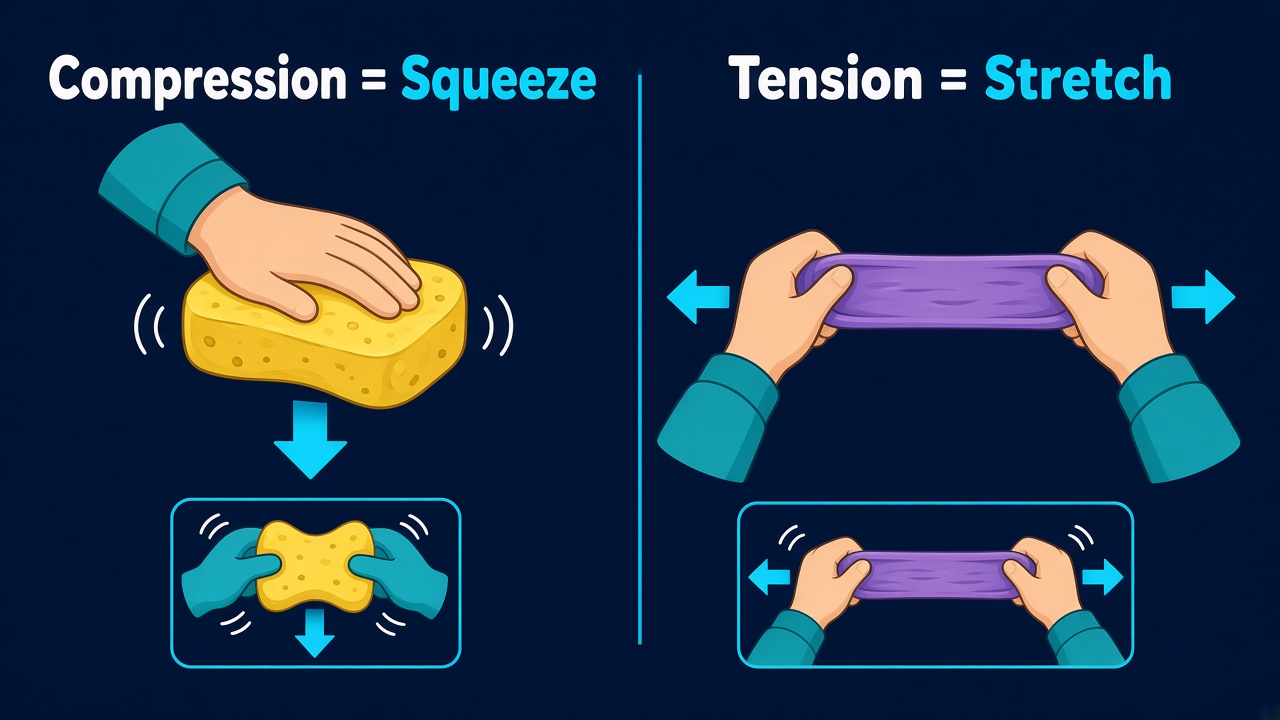
Squeeze pushes together. Stretch pulls apart.
- Beam bridge — A flat top rests on strong ends (like a board on two piles of books). The middle can sag if the beam is weak. Weight squeezes the top of the beam and stretches the bottom.
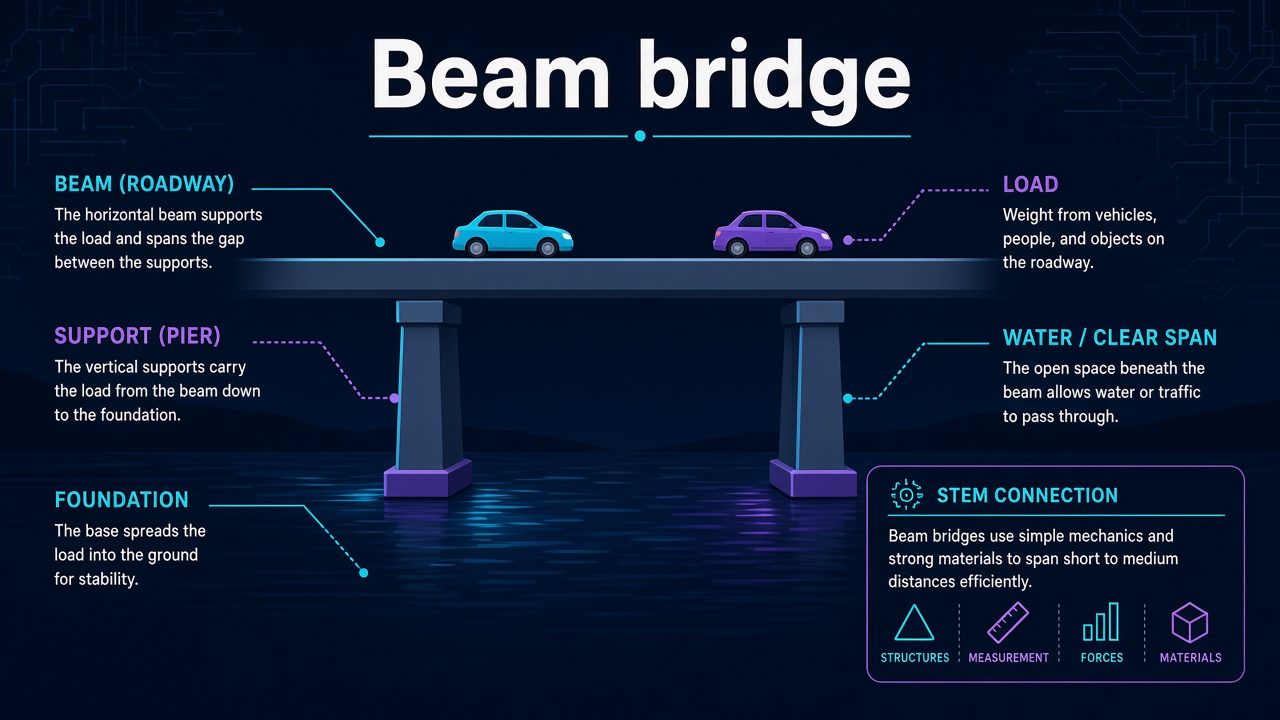
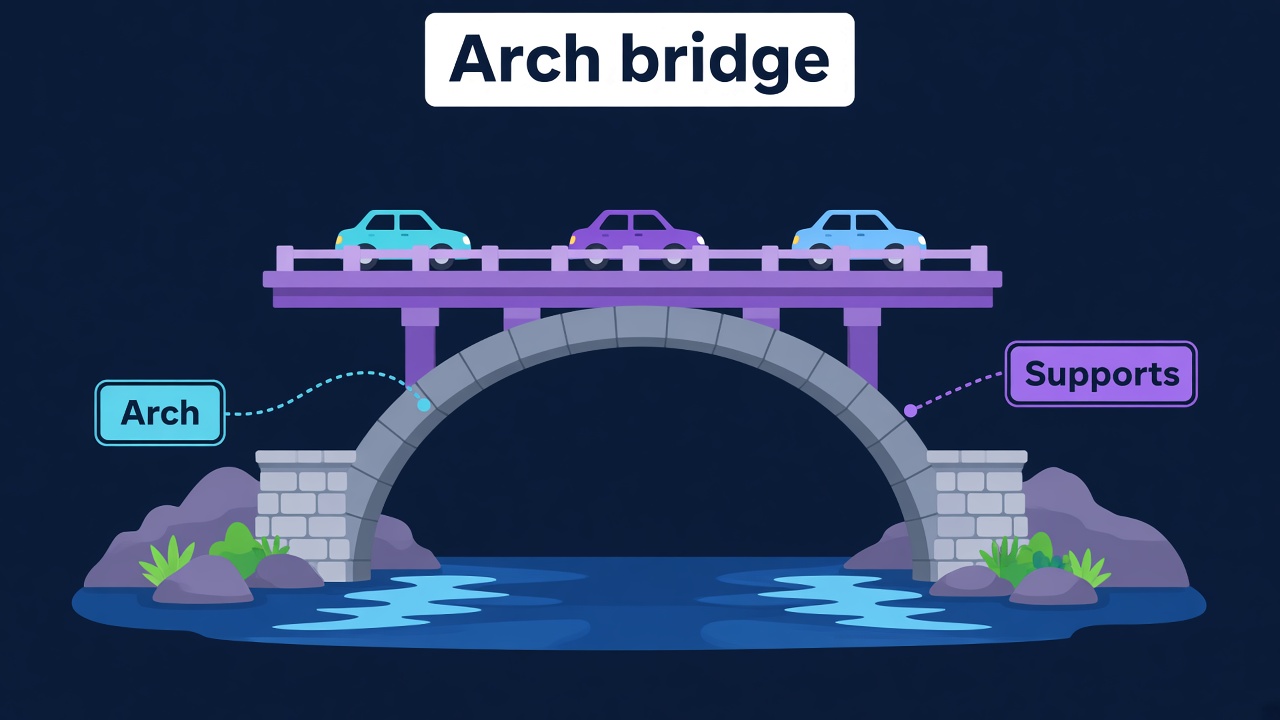
- Arch bridge — A curved shape. Weight travels along the curve and pushes out to the sides. The ground or side supports take that squeeze.
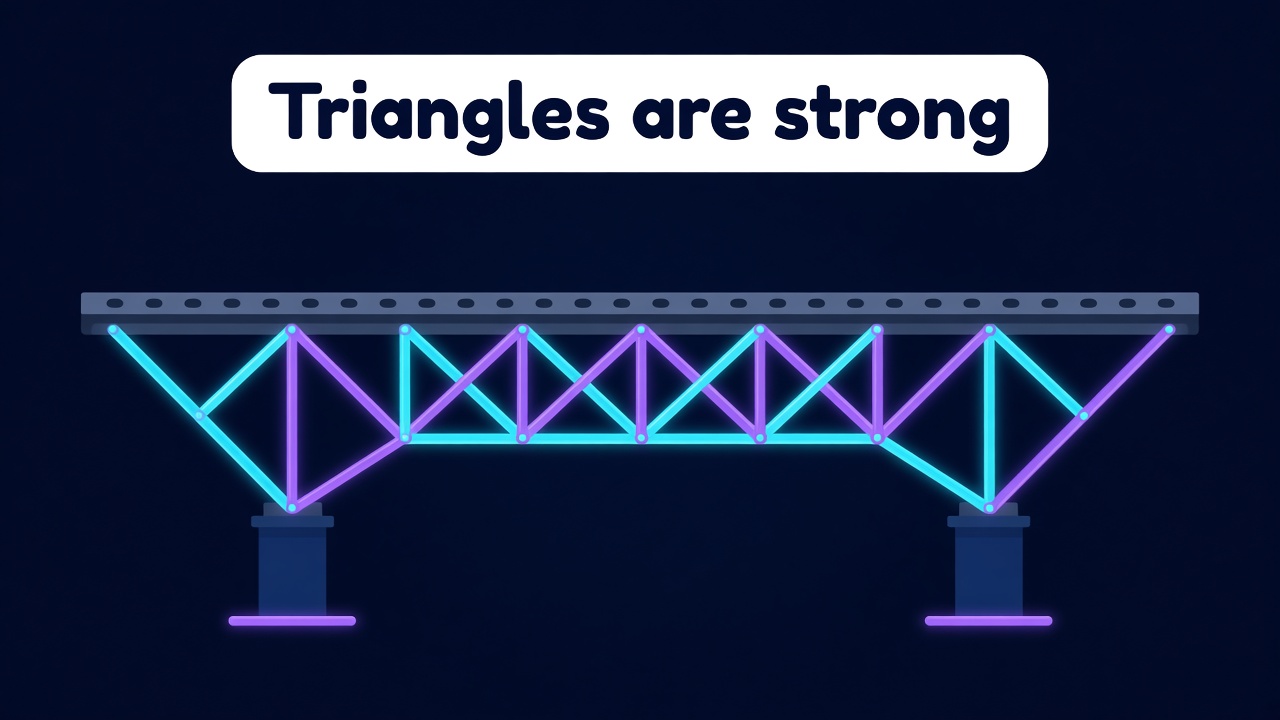
- Triangles — Triangles are strong shapes. They do not change shape easily when you push on them. Many bridges use triangles in their frames (trusses) to stay stiff.
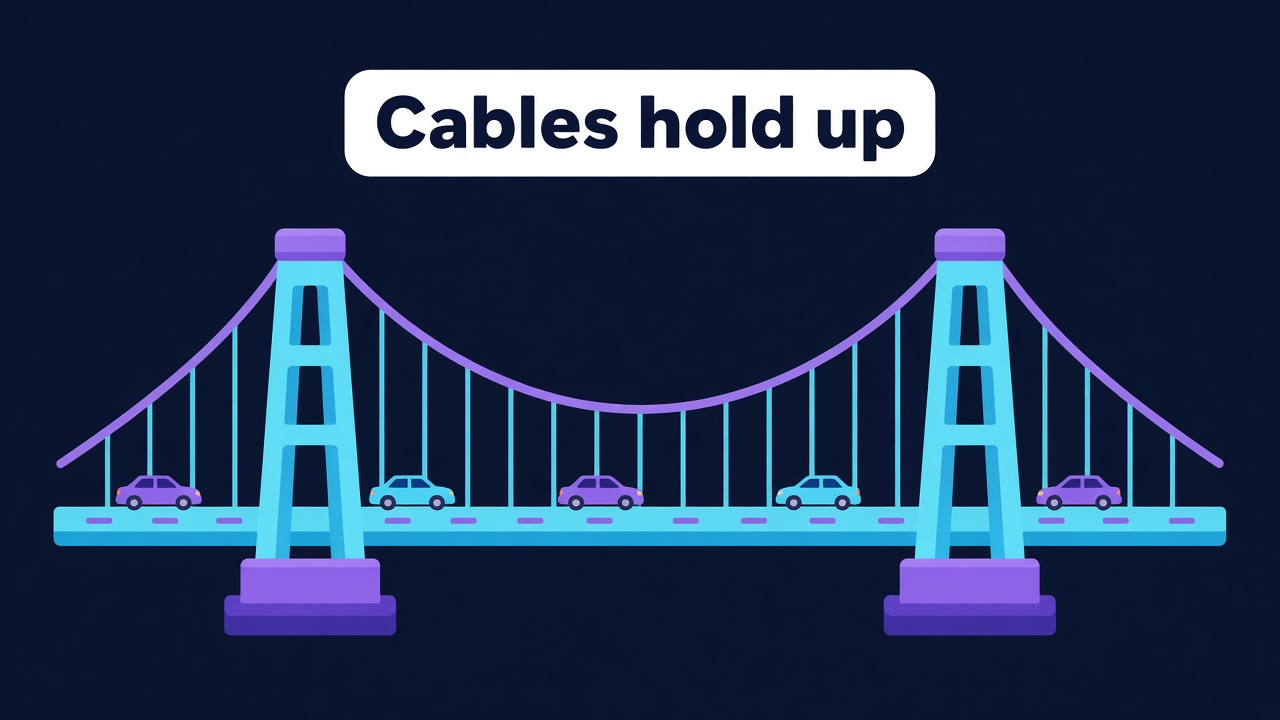
- Cables (simple idea) — Some bridges hang from cables. The cables stretch (tension) and help hold the roadway up. You do not need the hard math for this lesson — just the idea that stretch can help.
Engineers think about the span (how far the bridge must go) and the load (how heavy the traffic will be). Then they choose shapes and materials that can handle the squeeze and stretch.

Paper Bridge Challenge
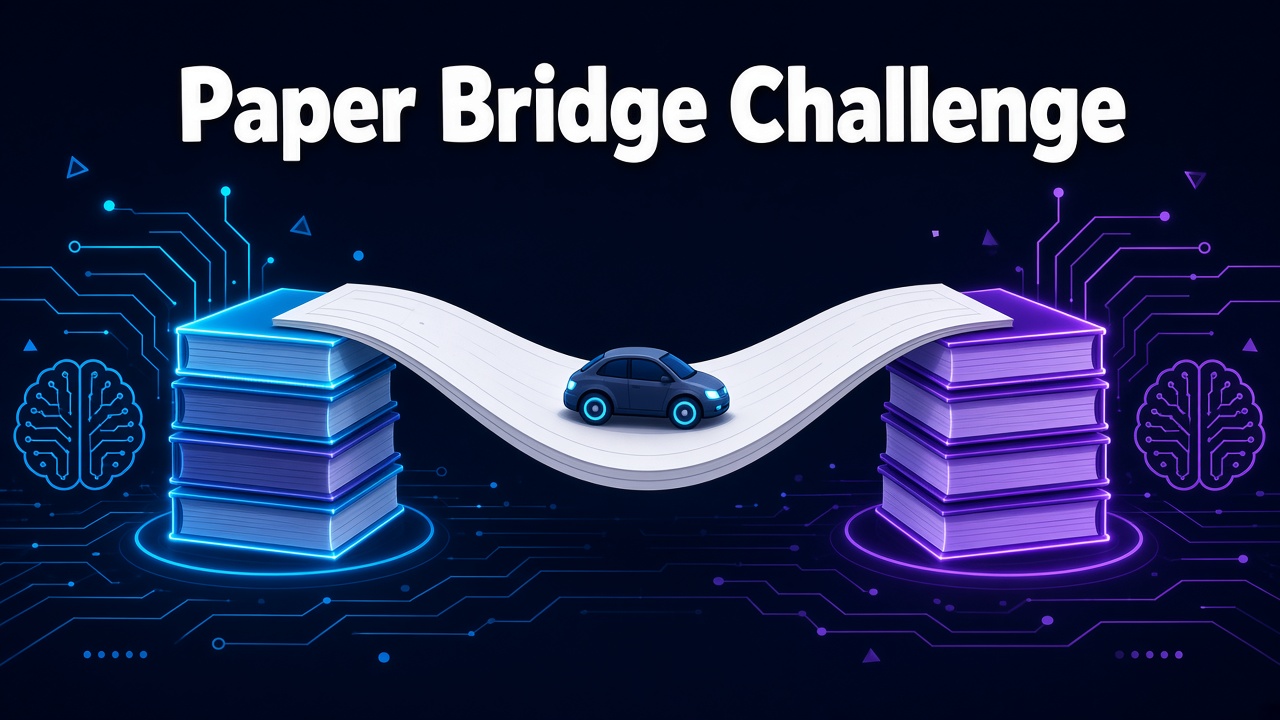
Goal: Build a mini bridge that holds a small toy car (or eraser) across a “river.”
Steps:
- Place two stacks of books the same height on a table, with a gap of about the width of your hand between them. The gap is your river.
- Lay one flat sheet of paper across the gap. That is your first beam bridge.
- Gently set a small toy car or eraser in the middle. What happens? (Often the paper sags or falls. That is okay — you are learning!)
- Improve the design. Try one change at a time:
- Fold the paper into an accordion (zigzag folds).
- Roll the paper into a tube and tape it.
- Fold the long edges up like walls.
- Tape a paper triangle under the beam (adult help with cutting).
- Test again with the same toy. Does it hold better?
- Optional: Try a simple arch by bending a cardboard scrap into a curve between the books, then rest a paper roadway on top.
Success check: Your bridge holds the toy in the middle for at least 5 seconds without collapsing. Bonus: Can it hold two toys?
Talk about it: Where do you see squeeze? Where do you see stretch? Which shape helped most?
Bridges matter because people need to get places safely. Without bridges, a river or a busy road can stop a whole neighborhood.
Engineers solve this problem. They ask: How far must we go? How heavy will the cars be? What shapes stay strong? Then they design, build, and test — just like you did with paper.
When a bridge uses strong shapes and balanced forces, families can cross without fear. That is why learning about squeeze, stretch, and support is useful — not just as a school idea, but as a real-world safety idea.
 You can notice bridge science in everyday life:
- On a walk or drive: Look at a highway overpass. What holds it up? Flat beams? Tall pillars?
- At the playground: Climbing frames often use triangles. Push gently on a triangle brace (with an adult watching) — it feels stiff.
- Near a creek or park: A walking bridge may be a simple beam or a gentle arch.
- In pictures: Big cable bridges show long cables that stretch to help hold the road.
When to use this lesson: On a rainy day at home, during summer STEM time, or after you spot a real bridge and want to dig deeper at the table (not on the bridge itself).
Optional parent extension: Watch a short Khan Academy bridge or force video together (see Source notes). Pause and ask your child to point out squeeze vs stretch. Keep it curious, not quizzy.
Check your thinking
Talk together. There are no trick answers — just good noticing.
- What job does a bridge do?
- What is a force?
- What does compression (squeeze) mean? What does tension (stretch) mean?
- Why might a folded or rolled paper hold more than a flat sheet?
- Name one place near you where you can see a bridge or a strong triangle shape.
Word bank
- Bridge — A path that goes over a gap so people or cars can cross safely.
- Force — A push or a pull.
- Weight / load — How heavy something is; the downward push on the bridge.
- Compression — A squeeze force that pushes things together.
- Tension — A stretch force that pulls things.
- Support — A part that helps hold the bridge up.
Supplemental STEM aid for home or summer learning — not a school curriculum replacement. Adult supervision for materials. Do not climb on or hang from real bridges.